Most people do not think about carbon dioxide when they read headlines about the Middle East. They probably should.
A significant military conflict involving Iran would disrupt global urea and ammonia trade almost immediately. That disruption would not stay overseas. It would work its way through commodity markets, into U.S. ammonia production economics, and ultimately into the CO₂ supply chain that beverage producers, food processors, and cold chain operators depend on every day.
The connection is not obvious, which is exactly why it is worth understanding before it becomes a crisis.
The Iran Connection
Iran is one of the largest urea exporters in the world. Urea is the most widely traded nitrogen fertilizer on the planet, and Iran ships millions of metric tons of it annually, primarily to markets in South Asia, Latin America, and Africa. Iranian urea production runs on subsidized natural gas, which makes it among the cheapest to produce globally.
A conflict that disrupts Iranian exports, whether through sanctions, shipping lane closures in the Strait of Hormuz, or direct damage to production infrastructure, would remove a significant share of global urea supply from the market. The last time Iranian trade was heavily sanctioned, urea prices spiked across every major trading hub.
But Iran is not the only exposure. The Strait of Hormuz is the chokepoint for roughly 20 percent of global LNG trade. Any disruption there affects natural gas prices worldwide, and natural gas is the primary feedstock for both ammonia and urea production everywhere, not just in Iran.
From Urea to Ammonia to Your CO₂ Supply
Here is where the supply chain gets interesting for anyone who buys CO₂ commercially.
Ammonia plants are the single largest source of commercial CO₂ in the United States. The Haber-Bosch process that produces ammonia generates a concentrated CO₂ stream as a byproduct. Major industrial gas companies capture that CO₂, purify it, and sell it into the merchant market for beverage carbonation, food processing, dry ice, and dozens of other applications.
Ammonia production economics are driven by two things: the cost of natural gas going in and the price of nitrogen fertilizer products coming out. When global urea prices rise, ammonia plants have an incentive to run full. When urea prices collapse or natural gas costs spike, plants curtail. Some shut down entirely.
A Middle East conflict creates a scenario where both variables move in the wrong direction simultaneously. Natural gas prices rise because of LNG supply disruption. Urea markets become volatile and unpredictable. U.S. ammonia producers face compressed margins and uncertain demand signals. The rational response, as we have seen before, is to cut production.
When ammonia plants cut production, CO₂ output drops with it. The CO₂ market has no say in that decision. We are a byproduct customer of an industry that makes production choices based on fertilizer economics, not CO₂ demand.
We Have Seen This Movie Before
This is not a theoretical risk. In 2022, high natural gas prices and ammonia plant curtailments created a nationwide CO₂ shortage that left beverage producers rationing product and small buyers scrambling for supply. In 2018, simultaneous plant shutdowns caused a similar crunch. Every major CO₂ shortage in recent memory traces back to the same structural problem: too much of our supply comes from sources that are sensitive to commodity cycles we cannot control.
A geopolitical disruption in the Middle East would be a version of the same problem, just with a different trigger. Instead of a cold winter driving up gas prices, it would be a conflict disrupting global energy and fertilizer trade. The result for CO₂ buyers would feel the same: tighter supply, higher prices, and smaller buyers getting squeezed first.
What Insulated Supply Looks Like
The question for anyone who depends on reliable CO₂ supply is straightforward: what sources are not tied to the same set of global commodity risks?
Biogenic CO₂ from fermentation and renewable natural gas facilities operates on a completely different set of economics. Ethanol production is driven by corn prices and domestic fuel demand. RNG production is driven by tipping fees and renewable fuel incentives. Neither of these feedstocks tracks with Middle Eastern geopolitics or global natural gas prices.
The CO₂ produced at these facilities is a fixed byproduct of the core process. When an ethanol plant is fermenting corn, CO₂ is being produced. When an RNG upgrader is cleaning biogas, CO₂ is being separated. These streams exist regardless of what is happening in the Strait of Hormuz or on the ammonia spot market.
The challenge has always been capturing and purifying that CO₂ to the quality standards that commercial buyers require, particularly beverage grade. That is the gap that distributed capture infrastructure is designed to fill.
Building Resilience Before the Next Disruption
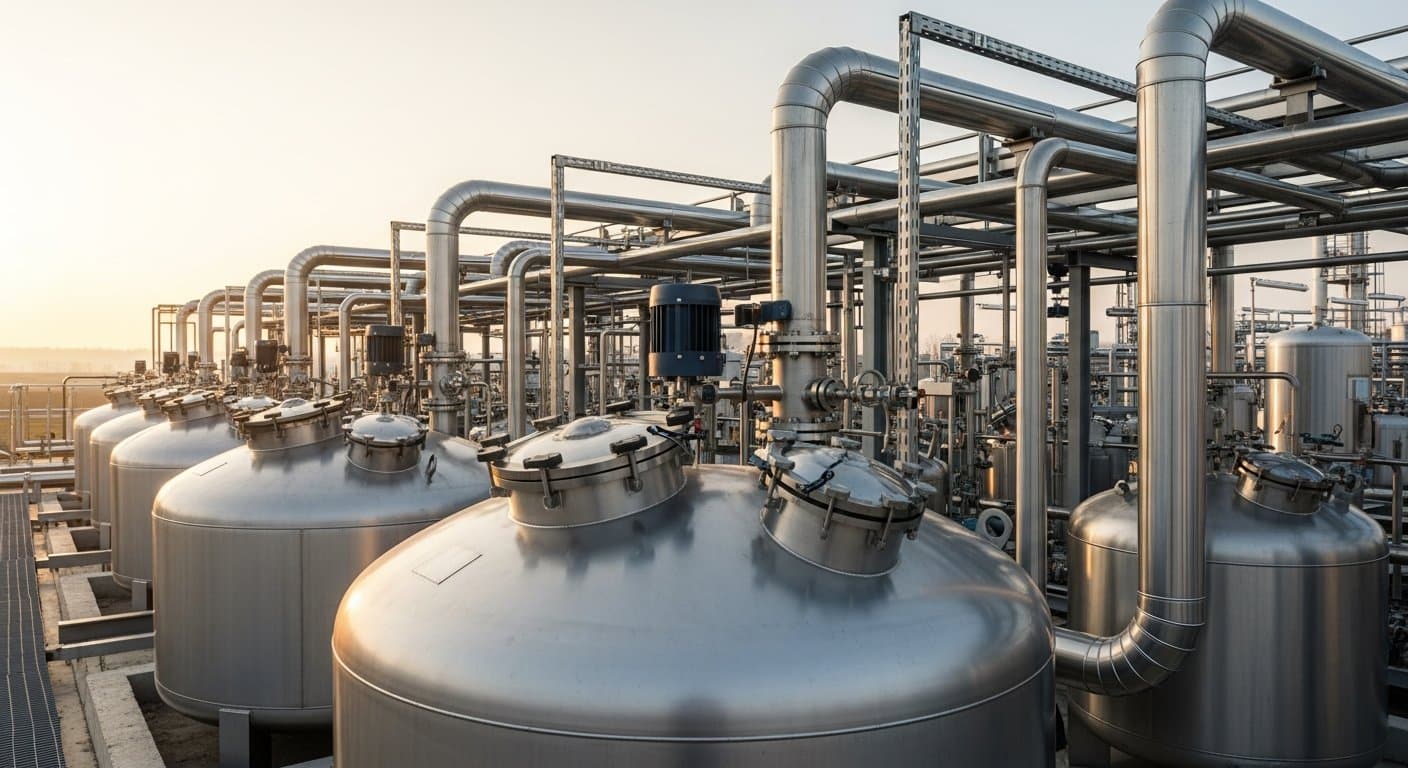
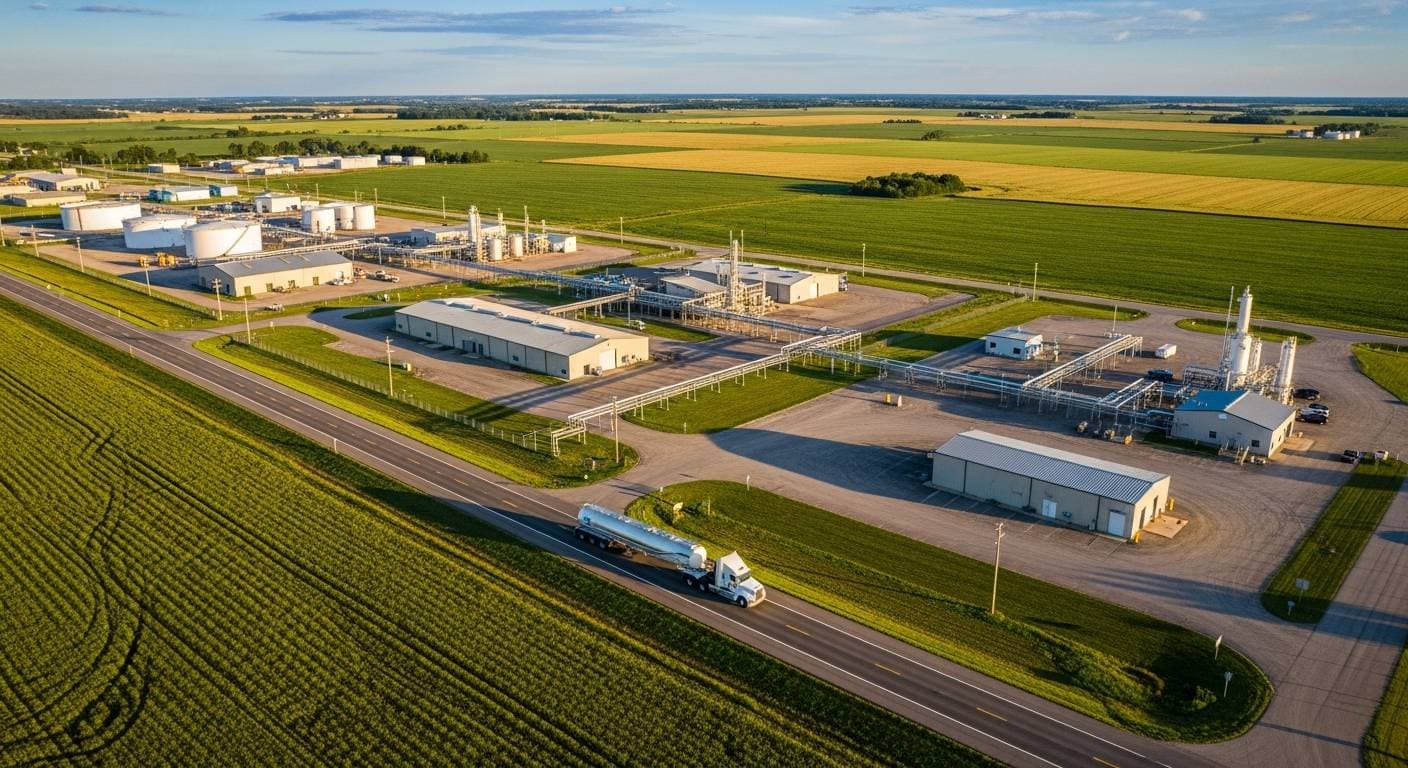
At CleanCycleCarbon, we co-locate at RNG facilities and capture the CO₂ stream that would otherwise be vented. We purify it to FDA registered, beverage grade quality using our patent pending cryogenic purification technology. The result is a domestic CO₂ source that is not coupled to ammonia production, not exposed to global gas prices, and not vulnerable to geopolitical disruptions half a world away.
No single facility solves the structural concentration problem in the U.S. CO₂ market. But every new distributed source that draws on an independent feedstock makes the supply chain a little more resilient. When the next disruption comes, whether it is a geopolitical crisis, a commodity price shock, or a string of unplanned plant outages, the buyers with diversified supply will be the ones who keep running.
The CO₂ supply chain does not need to be this fragile. The feedstocks for a more resilient system already exist at hundreds of facilities across the country. The opportunity is in building the capture and purification capacity to actually use them.